
1. Understand why customers come — and why they leave.
For one week, collect the questions and comments that recur at the counter. Ask a few regulars what they enjoy and what could improve. Long waits, unclear opening hours or inconsistent quality may matter more than the absence of promotions.
Choose one concrete problem to solve. For example, communicate waiting times better or explain availability before an order. Do not ask for a long survey on every visit; a few voluntary conversations can guide your first experiments.
2. Make the second visit as enjoyable as the first.
Customers return more easily when they know what to expect. Define with your team the basics to deliver every day: a warm welcome, product quality, clear prices and a response to complaints.
Recognising a regular can be as simple as remembering a preference they shared with you. Do not promise a level of treatment you cannot maintain during busy periods.
3. Give customers a specific reason to return.
A new product, a regular occasion or a reward after several purchases can become the next step. Avoid reducing prices systematically: a useful gesture may make more sense for your business.
Ask three questions when choosing a benefit: do customers want it, can your team deliver it and can your margin fund it? Test the idea with a few customers before making it a permanent promise.
4. Create a loyalty card that is easy to understand.
Explain what moves the card forward, the target to reach and the reward. Stamps suit comparable visits; points can support other purchasing habits. Avoid multiplying exceptions from the start.
Paper remains a simple option if you do not need digital tracking. A card in an app lets customers find their progress on their phone and helps the business organise its programme. With Fidèle, customers use the iOS or Android app and present their QR code; explain this journey without describing it as an app-free solution.
5. Get back in touch with useful information.
Before following up, ask what it offers: an anticipated new product, a relevant benefit or useful business information. Use only the contact channels and preferences the person accepted, and respect their choice to stop receiving messages.
Example to adapt: “Hello! Our new selection arrived this week. If you are in the neighbourhood, we would be delighted to show it to you.” Avoid repeated messages with nothing new or false urgency.
6. Measure whether customers really return.
For a first indicator, take identifiable customers who made their first purchase during a given week. Measure how many make a second purchase within the following 30 days. Let everyone complete their 30-day observation period before comparing two groups.
Fictional example: if 12 of 40 customers return within that period, the second-visit rate is 30%. Also track reward costs and associated sales. This figure alone cannot attribute the result to the programme: seasonality and your other actions may also explain a change.
Your first month: one action at a time.
Week 1: listen to customers and choose one service point to improve. Week 2: prepare a loyalty rule and check the reward cost. Week 3: train the team and offer the programme to a first voluntary group. Week 4: collect feedback and check that the journey works.
Then allow enough time to observe new visits. If a customer usually visits once a month, a few days cannot show the result. Adapt your programme to their rhythm, not to a promise of immediate growth.
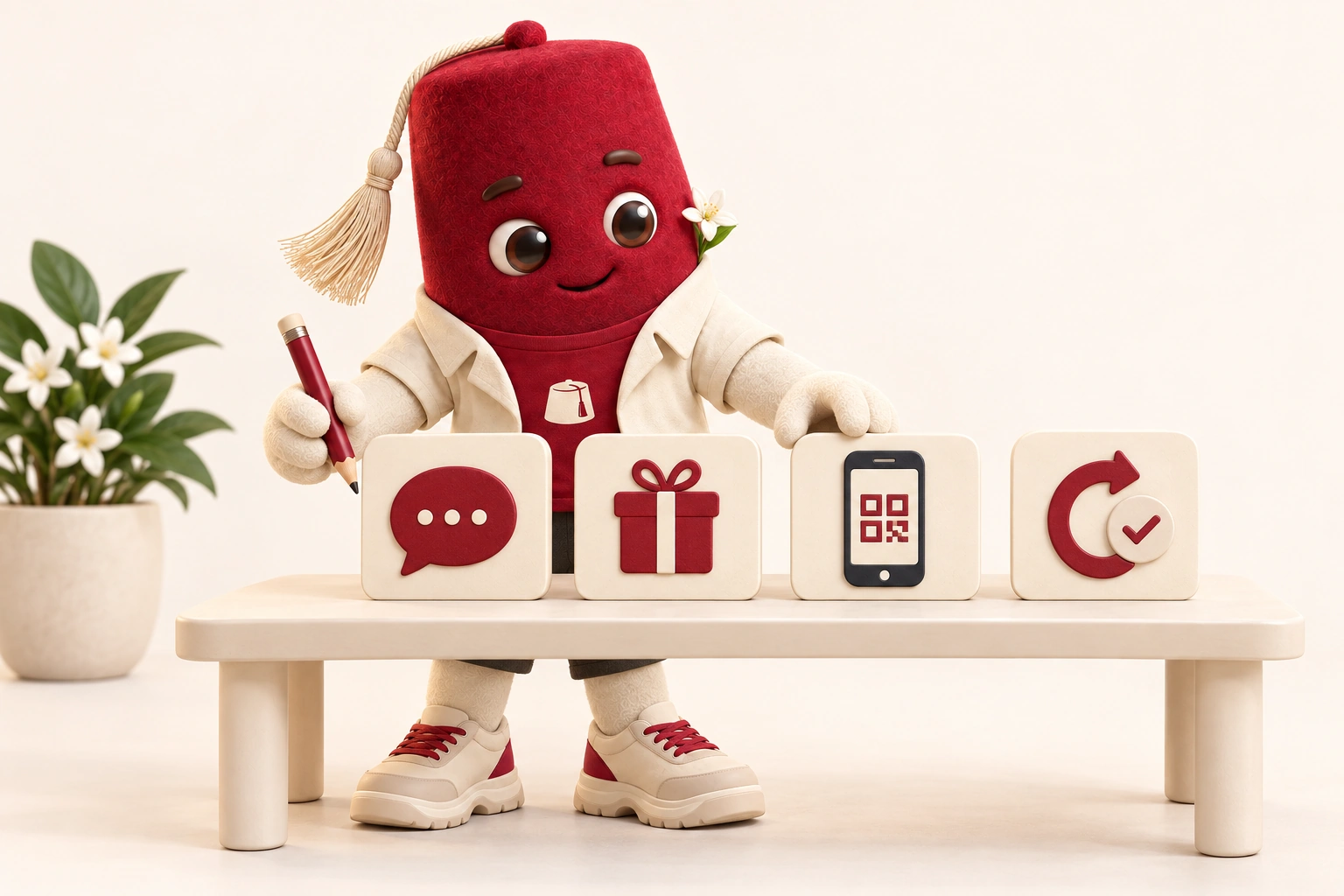
Your first month in four simple steps.
- 1. Listen
- Collect feedback and choose one point to improve.
- 2. Prepare
- Define a reward and check its cost.
- 3. Test
- Train your team and offer the programme.
- 4. Adjust
- Check the journey, then give customers time to return.
Your questions, answered.
How can I build loyalty without discounts?
Work on your welcome, consistency and small, useful gestures. You can also offer a specific reward instead of a permanent discount on every purchase.
Is an app enough to bring customers back?
No. It makes the programme easier to track and use, but the offer, service, rules and your team’s involvement remain decisive.
Which programme should a small business choose?
Start with the option that is easiest to explain and manage for your activity. Compare total cost, checkout use and the effort required from customers, then test on a small scale.